
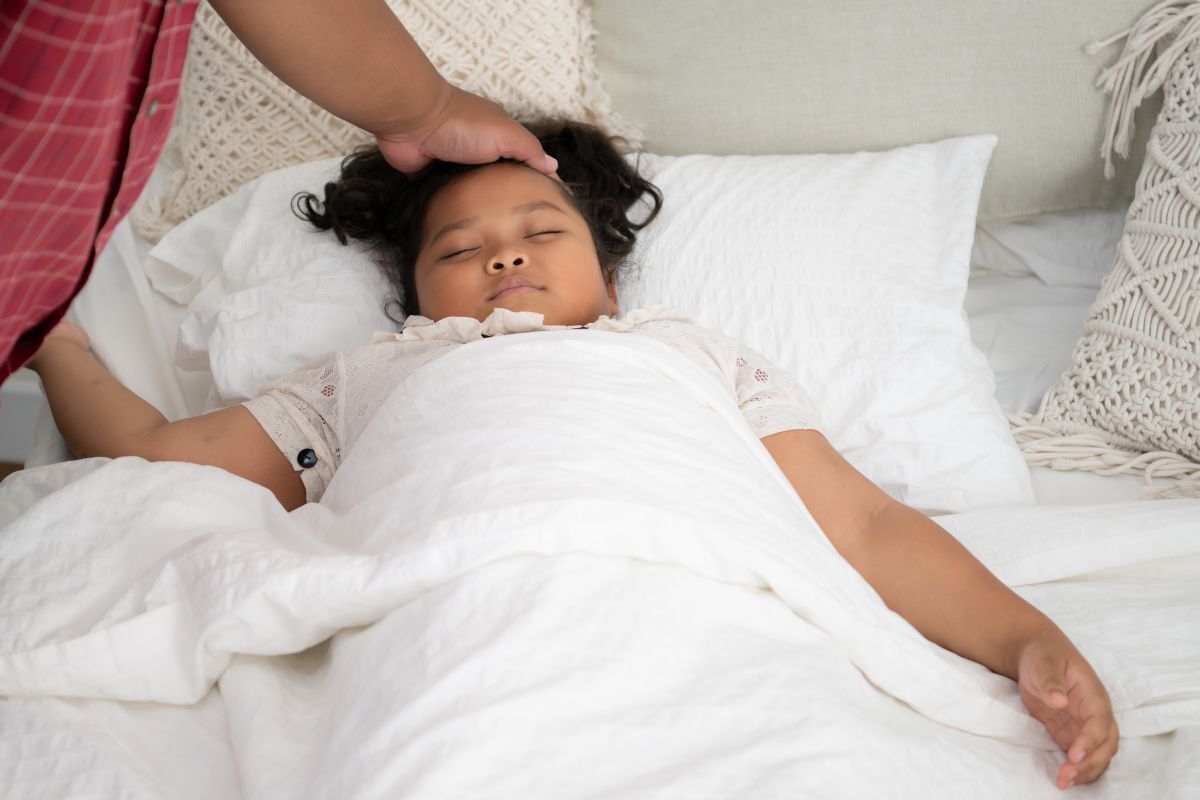
A child who snores loudly, sleeps restlessly, or seems unusually tired during the day may simply be having a rough night but sometimes these behaviors point to a sleep-related breathing problem. Sleep apnea in children can cause breathing to repeatedly stop or become restricted during sleep, interrupting the restful sleep a growing child needs.
If you have noticed several of these symptoms, it may be worth discussing them with your child’s healthcare provider. For families in Trinity, learning about sleep apnea treatment for kids in Trinity can help you understand available evaluation and treatment options. Parents can also explore the treatments provided by pediatric dentists to better understand the range of dental care available for children and how a pediatric dental evaluation may fit into their overall care.
Quick Answer
The most common signs your child has sleep apnea may include frequent or loud snoring, pauses or difficulty breathing during sleep, mouth breathing, restless sleep, unusual sleeping positions, morning headaches or difficulty waking, and daytime attention or behavior changes. These symptoms do not prove that a child has sleep apnea, so professional evaluation is important.
1. Your Child Snores Frequently or Loudly
Occasional snoring can happen when a child has a cold or nasal congestion. But frequent or loud snoring, particularly when it happens regularly, deserves attention.
The American Academy of Pediatrics recommends that children who regularly snore receive further evaluation, especially when other symptoms of obstructive sleep apnea are present.
Listen for snoring that is:
- Loud enough to hear from another room
- Present on many nights
- Accompanied by pauses or gasping
- Associated with restless sleep
- More noticeable when your child is sleeping deeply
Snoring alone does not mean your child has sleep apnea. However, persistent snoring is an important symptom to discuss with a healthcare professional.
2. You Notice Pauses, Gasping, or Struggling to Breathe
One of the more concerning signs is seeing your child stop breathing briefly, gasp, snort, choke, or struggle to breathe while asleep.
A parent may notice that their child’s breathing becomes quiet for a moment, followed by a gasp or sudden change in breathing. These interruptions can occur repeatedly during the night.
If your child appears to be having significant difficulty breathing, do not wait for a routine dental or medical appointment. Seek appropriate medical care promptly. If there is severe breathing distress or your child’s lips, tongue, or face become blue or gray, emergency medical attention is warranted.
3. Your Child Sleeps With Their Mouth Open
Mouth breathing during sleep can be another clue that your child is having difficulty breathing comfortably through the nose.
You may notice your child consistently sleeping with their mouth open, waking with a dry mouth, or breathing noisily at night.
Mouth breathing can have several causes, including nasal congestion and other airway issues, so it is not automatically a sign of sleep apnea. However, when it occurs together with snoring, restless sleep, or nighttime breathing changes, it is worth mentioning during an evaluation.
4. Sleep Is Restless or Your Child Sleeps in Unusual Positions
Children with sleep-disordered breathing may not look peaceful while sleeping. Instead, they may move around frequently, wake repeatedly, or sleep in unusual positions.
For example, you might notice your child:
- Tossing and turning throughout the night
- Sleeping with their neck extended
- Sleeping in a more upright or unusual position
- Waking frequently without an obvious reason
- Sweating or appearing uncomfortable during sleep
The AAP identifies disturbed sleep and unusual sleeping positions among signs that may occur with childhood obstructive sleep apnea.
Parents often notice these changes before a child realizes anything is wrong.
5. Your Child Is Difficult to Wake or Seems Tired During the Day
Poor-quality sleep can affect how a child feels during the daytime. Some children with sleep apnea may appear sleepy, tired, or less energetic.
However, daytime sleepiness does not always look like an obvious need for a nap. A child may instead seem irritable, unfocused, or have difficulty staying engaged.
The American Academy of Pediatrics lists daytime sleepiness and difficulty paying attention among possible symptoms of sleep apnea.
If your child consistently seems exhausted despite having enough time in bed, it is worth discussing their sleep habits and nighttime symptoms with their pediatrician.
6. You Notice Changes in Attention, Learning, or Behavior
Sleep affects more than energy levels. When sleep is repeatedly disrupted, some children may experience changes in attention, school performance, or behavior.
You might hear from a teacher that your child:
- Has trouble concentrating
- Seems unusually distracted
- Is more irritable than usual
- Has difficulty staying focused on tasks
- Is experiencing changes in school performance
The AAP recognizes attention and behavior problems among possible daytime signs associated with childhood sleep apnea.
These symptoms have many possible causes, so they should not be used to diagnose sleep apnea by themselves. But when they occur alongside regular snoring or nighttime breathing problems, they are worth bringing up with your child’s healthcare provider.
7. Your Child Wakes With Headaches or Doesn’t Seem Refreshed
Some children with sleep-disordered breathing may wake with headaches or still seem poorly rested despite spending enough time asleep. Morning headaches are among the symptoms identified in AAP guidance on childhood obstructive sleep apnea.
Pay attention to patterns rather than one isolated morning.
For example, if your child regularly wakes up tired, complains of morning headaches, snores heavily, or appears to have disrupted breathing during sleep, keep track of what you are seeing and share those observations with their healthcare provider.
Why Early Evaluation Matters
Sleep apnea is more than ordinary snoring. During obstructive sleep apnea, the upper airway can become partially or completely blocked during sleep, disrupting normal breathing and sleep patterns.
Untreated sleep apnea can be associated with problems involving behavior, learning, growth, and cardiovascular health, which is why persistent symptoms deserve professional attention.
Importantly, not every child who snores has sleep apnea. Primary snoring can occur without obstructive sleep apnea, so symptoms need to be evaluated rather than assumed to represent a diagnosis.
How Is Sleep Apnea Diagnosed in Children?
A healthcare professional will consider your child’s symptoms, medical history, physical findings, and sleep patterns. When appropriate, a pediatrician may recommend an overnight sleep study, known as polysomnography, to evaluate breathing and sleep during the night. A pediatric dental evaluation can also help parents understand the treatments provided by pediatric dentists and how different dental care options may support a child’s overall oral and airway health.
Depending on the child’s situation, evaluation may involve several healthcare professionals.
A pediatric dental evaluation may also be useful as part of a child’s overall care when oral or airway-related factors need to be considered. No Sugar Bugs Club Children’s Dentistry explains that its evaluation for sleep apnea treatment can include an examination, X-rays when appropriate, and review of existing sleep-study findings.
What Treatment Options Are Available?
Treatment depends on the cause and severity of a child’s sleep apnea.
Some children may need treatment involving the tonsils and adenoids, while others may benefit from CPAP or other approaches.
For selected children, an oral appliance may be considered. According to No Sugar Bugs Club Children’s Dentistry, the practice offers a custom oral appliance designed to help keep the upper airway open while the child sleeps. The appliance is created from impressions of the child’s teeth and adjusted to fit as needed.
The right treatment should be determined based on the child’s individual needs rather than simply choosing a device because a child snores.
What Should Parents Do If They Notice These Signs?
Start by paying attention to what happens during sleep.
If possible, write down:
- How often your child snores.
- Whether you observe pauses, gasping, or noisy breathing.
- Whether your child sleeps with their mouth open.
- How often they wake during the night.
- Whether they seem tired, irritable, or unfocused during the day.
You can share these observations with your child’s pediatrician or other appropriate healthcare professional.
For families in Trinity, FL, a pediatric dental evaluation may also be part of the broader assessment when sleep apnea or airway concerns are being considered.
If you want to learn more about local patient experiences, you can see patient reviews on Google before contacting the practice.
When Should You Seek Immediate Help?
Most concerns about snoring or possible sleep apnea can be addressed through a timely professional evaluation. However, breathing emergencies require immediate attention.
Seek emergency medical care if your child has severe difficulty breathing, cannot breathe normally, or develops blue, gray, or pale coloring around the lips or face.
For less urgent but persistent symptoms such as regular loud snoring, repeated gasping, or ongoing daytime changes schedule an evaluation rather than assuming your child will simply outgrow the problem.
FAQs
Can a child have sleep apnea without snoring?
Yes. Although frequent snoring is a common symptom, children can have different combinations of sleep-related breathing symptoms. If you notice breathing pauses, gasping, restless sleep, unusual sleeping positions, or significant daytime changes, discuss them with your child’s healthcare provider.
Is snoring normal for children?
Occasional snoring can happen, particularly during an illness or nasal congestion. Regular or loud snoring, especially when accompanied by other symptoms, should be evaluated rather than automatically considered normal.
How do I know if my child needs a sleep study?
A sleep study may be recommended when a healthcare professional suspects obstructive sleep apnea based on your child’s symptoms and examination. Polysomnography is an important diagnostic test for determining whether sleep apnea is present and assessing its severity.
Can a pediatric dentist help with childhood sleep apnea?
A pediatric dental professional may be involved in evaluating oral and airway-related factors and discussing appropriate treatment options. Depending on the child’s diagnosis and needs, care may also involve a pediatrician, sleep specialist, ENT specialist, or other healthcare professional.
Is sleep apnea treatment the same for every child?
No. Treatment depends on factors such as the cause, severity, age, health history, and findings from the child’s evaluation. Some children may need medical or surgical treatment, while other children may be candidates for an oral appliance or another approach.
Conclusion
Knowing the signs your child has sleep apnea can help you recognize when ordinary snoring or restless sleep may deserve a closer look. Frequent snoring, breathing pauses, mouth breathing, restless sleep, daytime tiredness, attention or behavior changes, and morning headaches can all be reasons to seek professional guidance.
You do not need to diagnose your child yourself. Instead, take your observations seriously and share them with the appropriate healthcare professional.
For families looking for information about sleep apnea treatment for kids in Trinity, No Sugar Bugs Club Children’s Dentistry can discuss your child’s symptoms, evaluate relevant dental factors, and explain whether an oral appliance may be an appropriate part of their care.
Call No Sugar Bugs Club Children’s Dentistry to schedule a consultation and discuss your child’s sleep-related concerns.