Dental Stellite

Ageing Fig 1 120486451

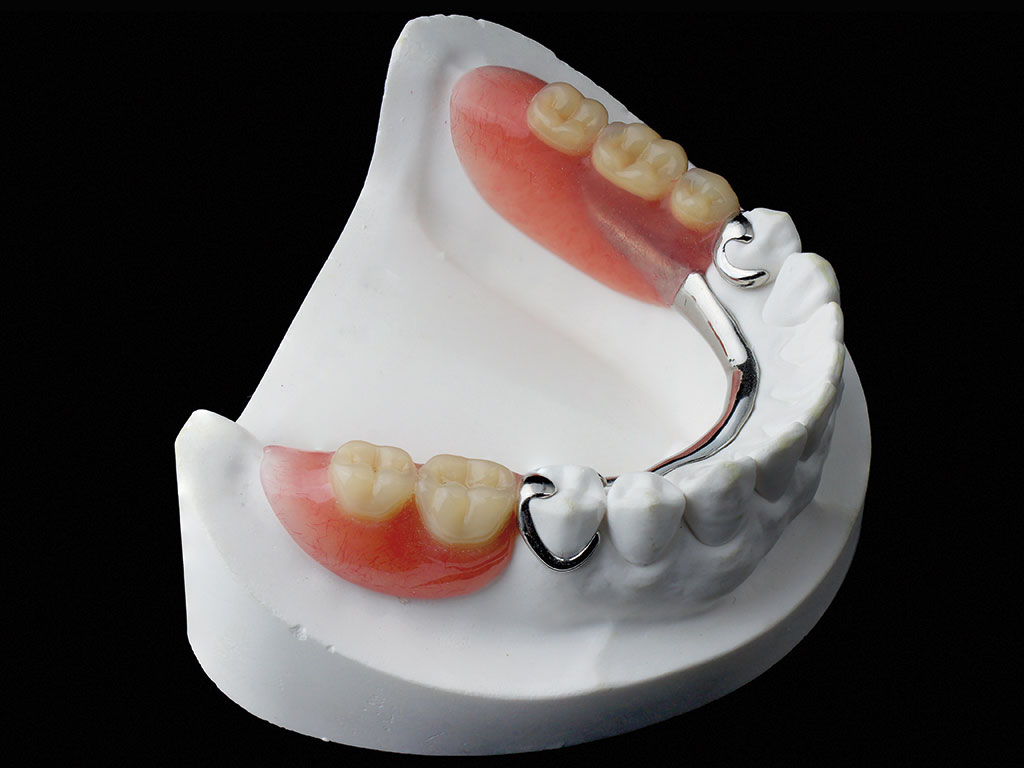
If you have had or need to replace some teeth with a removable partial device, you have certainly heard about stellite from your dentist. He has certainly offered to replace your missing teeth with a dental prosthesis. The base that will support your future teeth can be made of either resin or metal, usually a chrome nickel alloy or cobalt chrome if you are allergic to nickel. It is this construction, metal base with teeth in resin called dental stellite. In our dental offices, we often advise stellite because it has two significant advantages, strength and lightness.

What are the advantages of a stellite dental prosthesis?

Essentially its solidity.In fact the future denture will have to withstand very large chewing forces that can go up to 250 kg per cm2.The masticatory muscles have an unexpected strength, so that a dental prosthesis resin will have much more chances to fracture a dental device stellite. Its delicacy and a small footprint are also part of its advantages. 

Dental Stellite

Since the metal is much more resistant than dental resin, it goes without saying that the realization of dental stellite can support a smaller thickness that will facilitate the adaptation of the dental prosthesis. in mouth. It is always more pleasant to have in the mouth a dental device which is not troublesome. The language will be much less hampered by a less bulky dental apparatus, the speech will be facilitated.

Dental Stellite Without Hook

Dental stellite without hook

This kind of prosthesis is only found in total prosthesis, because it is always necessary at least two natural or crowned teeth so that dental stellite can be fixed there with hooks. If a dental device holds without hooks, it is necessary a total dental prosthesis to which one can add a metal plate to reinforce its solidity. We can then name it stellite, although in use we reserve this name only partial denture dentures.

Dental stellite price

The price of dental stellite is a brake in the choice of this option because it is much more expensive than a simple dental prosthesis resin. Its manufacture is complex and can not be industrialized, because it is necessary to achieve a casting of metal in a mold individual which represents a lot of manpower and thus a certain cost.

How is a dental stellite performed?

It is necessary at first time to make a complete examination of the mouth of the patient, to treat caries if necessary, to crown the teeth which will be used as support to avoid that they clarify by the permanent friction of the hooks. Then, the practitioner will make the most accurate footprint he will send to the laboratory so that the prosthetist performs the casting of the metal following the recommendations of the dentist’s layout. Some fitting later, to be certain that the color of the teeth is good, and that the stellite is perfectly executed, the patient will fully regain the use of his teeth and can chew again all the food he wants

Oral Health Tips For Teenagers Part 2 Of 2

Teens 1102x551

Oral health tips for children and teenagers

Now that we know what the most common problems are that our children might face in the previous blog, it is time to get on to the solution to these problems. They are simple steps that will help them have a beautiful smile and good oral health.

Importance of brushing

It is recommended that you brush your teeth at least twice a day. This should be taught to children from a very young age. They can be induced to listen to a song they like for three minutes to take time to brush their teeth. Technology can be truly be a great ally in these cases. Other than this, we also recommend using dental floss or interdental brushes. As parents we should enforce brushing before bedtime, because it is the most important. This complemented with the mouthwash will prevent the appearance of plaque and decay.

Teenager Brushing Teeth

Additionally, children must include tongue cleaning as a regular habit so as not to have bad breath. You should make sure your children get rid of habits such as biting pens, nails and other objects. It is ideal for young people to carry an oral hygiene kit for when they are away from home. Although if they cannot brush, they may choose to use sugar-free gum for a few minutes after eating or drinking. This is not a substitute for brushing, but it helps to clean your teeth a bit.

Good nutrition

They have to learn to eat healthy, especially eating a diet rich in vegetables, meat, fruits and fish. Another recommendation is to reduce sweets or replace them with those without sugar. If you are going to consume any soda, do it with a straw so it does not come in contact with your teeth. It is recommended that you rinse your mouth when you have finished drinking it. Another of the oral health tips for teenagers is to encourage them to drink water during the day to eliminate excess food and bacteria from their mouths. If your child practices a contact sport, he should wear a mouth guard to prevent oral injuries. But you should keep it clean and store it in a ventilated container.

Beware of anorexia and bulimia

It is necessary to be aware of the behavior of young people, because according to experts they are increasingly obsessed with their appearance. They focus for example on posting a perfect photo on social networks. If they do not meet the standards, they often require cosmetic surgery, new dentures or fall into diseases such as bulimia or anorexia. Both pathologies seriously affect oral health. These disorders cause wear, hypersensitivity, cavities, gum retraction until denture loss. Therefore, if you suspect that your child may be one step away or suffer from any of these diseases, you should seek medical attention. We should all become responsible for our own and our children’s oral health. The tips mentioned in this post can help prevent any major trouble and save you and your children from a lot of trouble.

Does It Hurt To Wear Braces?

Does It Hurt To Wear Braces

It’s not as bad as you think. Each person has a different pain limit. One may feel severe pain, the other may not feel anything. Yes, braces can bring some discomfort. But what else would you expect if a foreign object invades the body and establishes new rules of the game for your old crooked teeth?

Installation process – does it hurt to put braces?

  • The patient sits down in a chair, and then the matter is in the hands of the orthodontist.
  • The doctor prepares the teeth for the installation of bracket design. The doctor treats with a cleanser, rinses and dries the enamel.
  • The orthodontist puts on “locks” on the outer teeth, which will fix the arc.
  • A bracket is attached to each dental unit with an adhesive substance.
  • The arc is installed in the “locks” and is threaded into each groove (recess in braces).

During installation, the patient sits with his mouth wide open. After a while, a person may become uncomfortable in this position, because the muscles of the mouth flex. The installation time of the bracket system is around 1 to 2 hours. Of all these steps, the most stressful for the patient is the stage of fixation of the arc. At this moment, the patient will experience unusual impressions – the arc compresses the teeth. This means that the bracket design has begun to align the bite. Putting braces is not painful. Unpleasant sensations appear after fixation.

How long do teeth hurt after installation?

So, the worst is past – the bracket system is installed. But the patient needs to adapt to change. Braces are “outsiders” for the oral cavity. Teeth need time to come to terms with new “neighbors.” Gradually, teeth and braces get used to each other, a connection appears between them. The lapping period or the adaptation period is from 4 to 15 days. In some patients, it can last longer up to 1 month. During adaptation, a person is faced with a whole bunch of new sensations:

  • Pressing and aching pain due to arch pressure on the teeth
  • Rubbing the mucous membranes (cheeks, inner side of the lips) with braces
  • Problems with chewing food
  • Discomfort during hygiene procedures

How to reduce pain?

During the first days you need to adhere to a “soft” diet. It is allowed to use liquid and creamy foods, and finely ground food such as yogurts, fruit and vegetable purees and viscous cereals.

  • Use a special wax if the braces elements rub on the mucous membrane.
  • When the teeth begin to move, the gums can become inflamed. Rinsing will help relieve pain.
  • Do not touch the structure with your tongue, hands, or foreign objects.

Is Dental Sedation Safe for Kids?

Sedation Is A Great Way To Improve

Sedation has long been used in the dental field as a way to improve the lives of children undergoing care. For some kids, it can be difficult to sit still for treatment, or they might suffer panic attacks and anxiety whenever visiting the office. While we do everything we can to improve their experience in our office, there are times when a child would benefit from quality sedation. As a parent, you might be wondering if sedation is safe for your child and if it is necessary when undergoing dental procedures.

What Sedative Options are Available?

We offer several different types of sedation that are all suited to children. Nitrous oxide involves placing a mask over the nose and instructing your child to breathe in the sweet-smelling fumes. This sedative helps to relax your child so that they can be more comfortable in the office. The effects wear off quickly once the mask is removed. Oral sedation involves taking a small pill, which works to relax and calm down anxious kids. IV sedation is ideal for kids who are undergoing more complex procedures and who need to be in a sleep-like state to receive care.

Sedation Has Long Been Used In The Dental
What Sedative Options Are Available

Is Sedation Safe for Kids?

Sedation is always safe for children because we carefully administer it and monitor it throughout the course of the appointment. Sedation is personalized to your child’s needs, and we will go over any medical or health information prior to recommending sedation to them. You can feel confident in knowing that sedation is entirely safe and effective for your child. In fact, many parents find that sedation improves their child’s experience in a way that eliminates fear and anxiety.

Who Can Benefit From Sedation Dentistry?

Most children can benefit from sedation when coming in for treatment. We often recommend sedation to kids who have disabilities or special needs, since it might be difficult for them to sit still in the dental chair. If your child is coming in for more invasive treatment, we may recommend undergoing sedation in order to make the procedure more comfortable for them. You can always rest assured that sedation is safe for your child, and we are here to answer questions you may have regarding sedative options.

If you would like to learn more about sedation and how it can benefit your child, call us today to speak with one of our helpful staff members.

Sedation Dentistry: Questions to Ask Your Dentist

What Is Sedation Dentistry For Children

Sedation is a great way to improve your child’s experience while in our office. We offer nitrous oxide, oral and IV sedation to make it easy for your child or teen to receive the dental treatment that is needed. Before they undergo sedation, you may have some questions regarding what to expect throughout the course of treatment. We are here to answer any and all questions that you might have concerning sedation dentistry.

What Options are Available?

We offer a number of different sedative options specific to children. Children and teens may benefit from nitrous oxide, oral sedation as well as IV sedatives for the treatment that is needed. Be sure to ask us about these choices and which one is best suited to your child’s needs.

What to Expect Before, During and After Sedation?

Sedation often puts your child into a deeply relaxed or sleep-like state during treatment. It’s a good idea to know what to expect before, during and after sedation has been administered. In most cases, we will recommend that children and teens have a way to get home with a relative because they may not be awake enough to get home themselves. This is especially true for teens who may drive themselves into the office.

Sedation Is A Great Way To Improve
What To Expect Before, During And After Sedation

Is Sedation Safe?

Sedation is always a safe and reliable option for our patients. Regardless of your child’s age or medical needs, we safely administer and monitor sedation while they are in the office. We even provide aftercare to our patients to ensure that they know what to expect as the sedative wears off. You can feel confident in knowing that sedation has been used for many years on children undergoing dental care. It helps kids to relax during treatment, and it can be especially beneficial for those who may have special needs that prevents them from sitting still for their care.

Does My Child Always Need Sedation?

There are times when some children benefit from sedation with every visit. This often includes children with severe anxiety or who have special needs. We can go over your child’s specific needs to determine if they may benefit from sedation at every appointment, or if it is only necessary for more invasive treatments.

If you’d like to learn more about sedation, call our office today so that one of our friendly staff members can further assist you.